Kali and Mahakali: The Transformative Power of Divine Consciousness
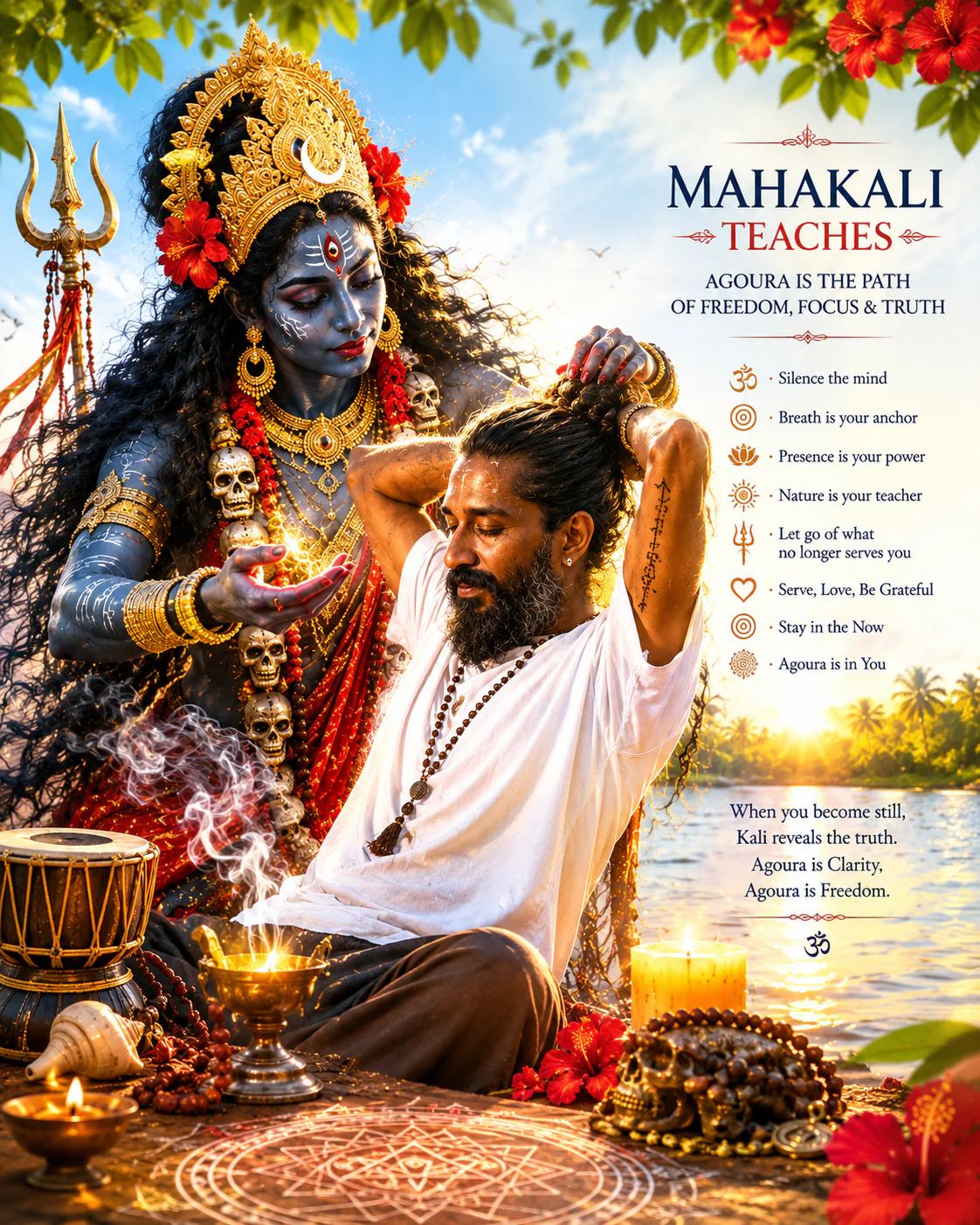
In the spiritual traditions of India, Kali is the mysterious and powerful form of the Divine feminine that is often misunderstood. Her dark complexion, wild hair, fierce expression, garland of skulls and sword can appear frightening to the modern eye. Yet for millions of devotees, Kali is not a goddess of evil or destruction. She is Shakti — the primordial feminine power of existence — and her fierce appearance represents something much deeper: the destruction of ignorance, ego, fear and everything that prevents consciousness from becoming free.
Kali invites us to look directly at what we normally avoid. She asks us to face what we don’t want to see. She reminds us that everything in the material world changes. And she teaches that sometimes transformation requires us to let something end before something new can emerge. At Shiva Rishi Yoga in Varkala, we approach these ancient stories about Hindu gods not simply as mythology, but as living expressions of the deeper yogic understanding of consciousness.
Who Is Kali?
The Sanskrit word Kali is closely associated with kala, meaning time. This relationship is significant: Time consumes everything. Our bodies change. Relationships change. Seasons change. Thoughts arise and disappear. Civilizations rise and fall. Even the mountains slowly change. Kali represents the power of time and transformation.
She is therefore not simply a destructive deity. She represents the reality that nothing conditioned can remain permanent. In this sense, Kali is deeply connected with one of the fundamental insights of yoga: attachment to temporary forms is one of the causes of suffering. We often try to hold on to what is changing:
- We want the body to remain young.
- We want relationships never to change.
- We want circumstances to remain comfortable.
- We want our identity to remain fixed.
Kali cuts through this illusion. Her sword can be understood symbolically as the sword of viveka — discernment. It cuts through confusion and false identification.
Mahakali, “the Great Kali,” can be understood as the vast, cosmic dimension of Kali — Shakti beyond limited individual identity. She is not merely the goddess who destroys something. She is the power within the universe through which creation, preservation and dissolution continually occur.
The Story of Kali and demon Raktabija
One of the most famous accounts of Kali appears in the Devi Mahatmya, an important Sanskrit text within the Shakta tradition.
During the battle between the Divine Mother and the forces of the asuras, the demon Raktabija possesses a remarkable power: whenever a drop of his blood falls to the ground, another demon like him emerges. The more he is attacked, the more numerous he becomes.
The Divine Mother manifests Kali to overcome this seemingly impossible situation: Kali consumes the blood before it can fall to the earth, preventing the multiplication of the demon.
Beyond the literal story, this can be read as a powerful psychological metaphor. Some patterns in our minds behave like Raktabija. The more we fight them without understanding them, the more they multiply. For example, Anger creates more anger. Fear creates more fear. Resentment produces more resentment. And so forth.
Kali represents the consciousness capable of stopping this cycle at its root. Instead of allowing every reaction to create another reaction, awareness interrupts the chain. This is one of the reasons Kali can be understood as profoundly yogic.
Kali and the Destruction of the Ego
The most important demon for the spiritual seeker is not outside. It is the limited sense of “I.” Yoga repeatedly asks us to investigate:
Who am I?
Kali’s fierce iconography can be interpreted as an image of the dissolution of false identifications: Her sword cuts. Her dance destroys. Her presence is uncompromising. But what is being destroyed?
Not consciousness itself. Rather, the structures that prevent us from recognizing consciousness. This is why Kali can simultaneously represent death and liberation. The death of ego can become the birth of freedom.
Understanding Kali’s Iconography
Every aspect of Kali’s traditional image carries layers of symbolism.
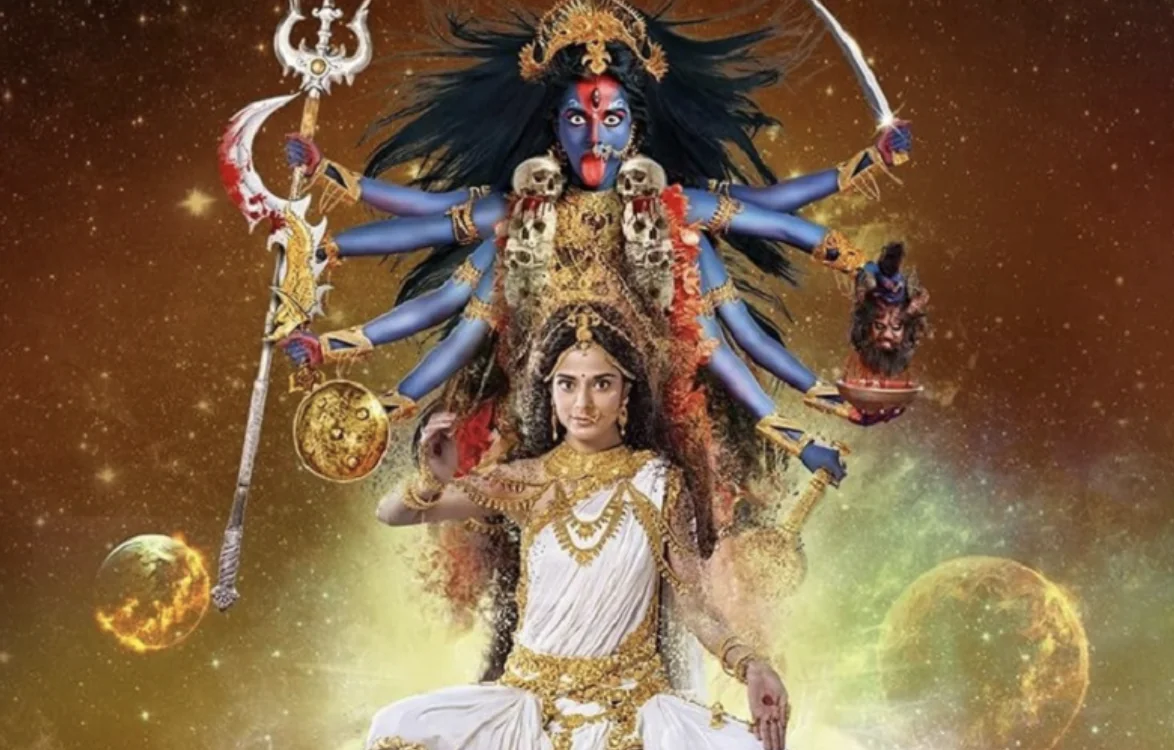
Her dark or black appearance can represent the infinite, the unmanifest and that which contains all colours yet is itself beyond ordinary perception.
Her loose hair can symbolize freedom from conventional limitations.
Her sword represents the power to cut through ignorance.
Her severed head can symbolize the destruction of egoic identification.
Her garland of heads has been interpreted in various traditions as representing the destruction of limited identities and the transient nature of embodied existence.
Her tongue and fierce expression are connected to different stories and interpretations, including the well-known story in which Kali steps upon Shiva during her ecstatic dance of destruction.
The image is therefore not simply intended to frighten, but to confront. It asks the devotee to look at death, impermanence and ego without turning away.
Kali and Shiva
The relationship between Kali and Shiva is one of the most profound images in Indian spiritual symbolism. Shiva represents pure consciousness. Shakti represents the dynamic power through which consciousness manifests. Without Shakti, Shiva is described as inactive. Without consciousness, Shakti has no foundation.
The famous image of Kali standing upon Shiva therefore carries a deep philosophical meaning. Consciousness and energy are not ultimately separate. In yoga, we experience a similar relationship within ourselves. Awareness is present, yet energy moves.
The body, breath, thoughts, and emotions move.
But behind all this movement there is the possibility of witnessing awareness. Yoga teaches us to recognize both dimensions. Through asana and pranayama we move, through shavasana and meditation we witness stillness.
Kali, Death and Impermanence
Modern society often tries to hide ageing and mortality, showing the deeply rooted fear of death of most people. Either the fear of one’s own death or the death of loved ones.
Indian spiritual traditions have historically approached these realities differently. Death is not necessarily understood as the opposite of life. It is part of the cycle of existence. Kali stands at this boundary. Her association with cremation grounds and death imagery reminds the seeker that the physical body is temporary. This is not meant to create despair. It is meant to create vairagya — a deeper freedom from attachment.
When we remember that life is temporary, we may begin to live more consciously. We appreciate people more deeply. We become less attached to trivial conflicts. We recognize the value of time.
Kali in Kerala and Amma’s Ashram
Kali has a particularly strong presence throughout Kerala, where forms of the Divine Mother are worshipped in temples, sacred groves and village traditions. Kerala’s spiritual culture contains many expressions of Shakti worship, from highly formal temple traditions to local devotional practices.
This is part of what makes the spiritual landscape around Varkala so rich. The region is not simply a destination for yoga and meditation. It is part of a much older cultural landscape where temples, forests, sacred rivers, mountains and spiritual traditions have existed alongside one another for centuries.
For a student visiting Shiva Rishi Yoga, exploring these traditions can provide a deeper context for understanding yoga itself.
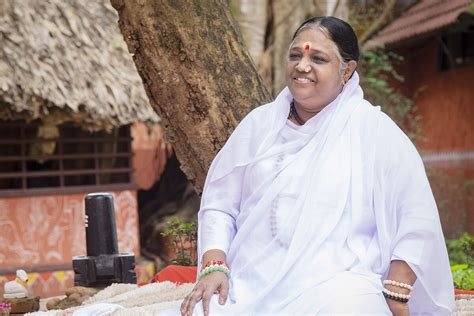
The connection between Kali and the modern spiritual life of Kerala becomes especially interesting through Amma, Mata Amritanandamayi Devi. The word Ma or Amma means mother. In the Indian devotional imagination, the Mother is not necessarily gentle in only one way.A mother protects and removes what is harmful, as well as nourishes but also disciplines.
Kali represents the fierce dimension of this motherhood. She is the Mother who refuses to allow ignorance to continue indefinitely. She is compassionate, but her compassion is not always comfortable. Sometimes the greatest blessing is the removal of something we desperately wanted to keep. This is why Kali is both feared and loved.
At Amma’s ashram, Amritapuri, in Kerala, the Divine Mother is honoured through devotional worship, including a temple dedicated to Kali. The temple and its worship form part of the broader spiritual environment of the ashram, where meditation, seva, prayer, chanting and devotion are woven together.
Amma’s teachings emphasize love, compassion, selfless service and the recognition of the Divine in all beings. Within that environment, the presence of Kali offers another dimension: the compassionate Mother is also the transformative power that removes ignorance and attachment.
This relationship between Shakti, devotion, service and inner transformation is something worth exploring when we look at Amma herself — one of the spiritual teachers whose work has influenced the wider yoga and spiritual community of Kerala. This leads naturally to another story — the life and teachings of Amma, Mata Amritanandamayi Devi, and the extraordinary spiritual community she has built in Kerala. You can read more about Amma in our other Blogpost here.
A Kali Practice for the Modern Yogi
The yogic path is not about destroying the personality. It is about becoming free enough to see the personality clearly and integrate all aspects of ourselves with compassion to live a life in balance with ourselves and other beings. When meditating on Kali, you can ask yourself:
What is real?
What is temporary?
What can be released?
The Mantra of Kali
One of the simplest devotional mantras associated with Kali is:
Om Kali Namaha
ॐ काली नमः
It can be understood as:
“Om, salutations to Kali.”
Another well-known invocation is:
Om Krim Kalikayai Namaha
ॐ क्रीं कालिकायै नमः
Here, Krim is regarded in Shakta traditions as a bija mantra associated with Kali.
Mantra should be approached with respect for its lineage and not merely as a collection of sounds. For a beginner, simply repeating Om Kali Namaha with a steady mind and sincere intention can become a devotional meditation. The purpose is not to force an experience. It is to cultivate awareness, devotion and inner steadiness.
May the wisdom of the Divine Mother give us courage to face what must be transformed, strength to walk through uncertainty, and compassion to recognize the sacred presence within all beings.
Om Kali Namaha.
The Courage to Transform
Kali ultimately asks us a simple question:
What are you willing to let go of in order to become free or create space for what our soul truly craves?
This is a question every serious yoga practitioner eventually encounters. We cannot transform while holding tightly to everything familiar. Growth requires change. Meditation reveals patterns. Awareness exposes unconscious habits.
Yoga gradually teaches us that freedom is not the accumulation of more things, identities and achievements. Freedom is the ability to release and surrender.
Kali stands at that threshold.
She reminds us that endings are not always failures.
Sometimes an ending is an opening.
Sometimes destruction is purification.
Sometimes darkness is required to plant a seed.
And sometimes the fierce face of the Divine Mother is simply the face of unconditional compassion refusing to let us remain asleep and forcing us to look and listen carefully.