The Art of Teaching Asana
Shiva Rishi Yoga — Varkala, Kerala
Practice deeply. Understand intelligently. Teach consciously.
A yoga teacher’s journey does not end when the training finishes. It begins when knowledge becomes experience, and experience becomes the ability to guide another person.
From Personal Practice to Intelligent Teaching
At Shiva Rishi Yoga, we believe that teaching yoga begins long before standing in front of a class.
A teacher does not simply demonstrate a posture and ask students to follow. A meaningful yoga teacher learns to observe, experience, understand, adapt, and communicate.
Every asana has a physical structure, but it also has a quality of breath, attention, stability, movement and awareness. Learning to teach means learning to see all of these layers together.
Practice First. Teach Second.
Before teaching an asana to another person, experience it yourself. Stay with the posture. Explore it slowly.
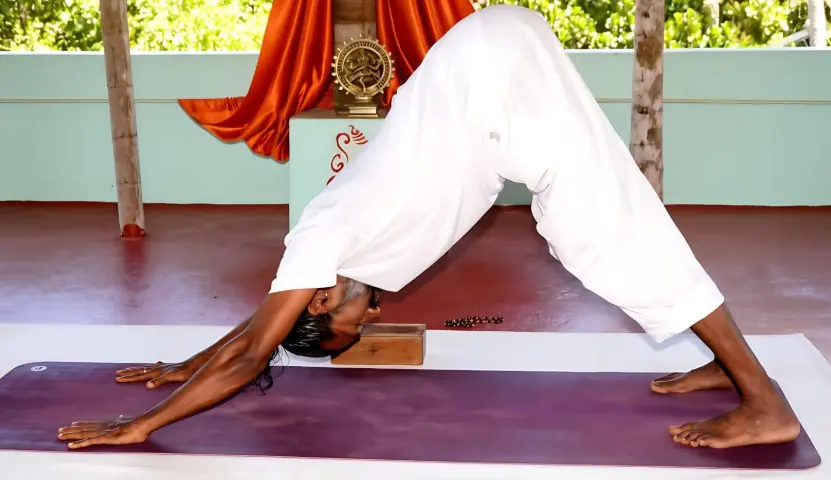
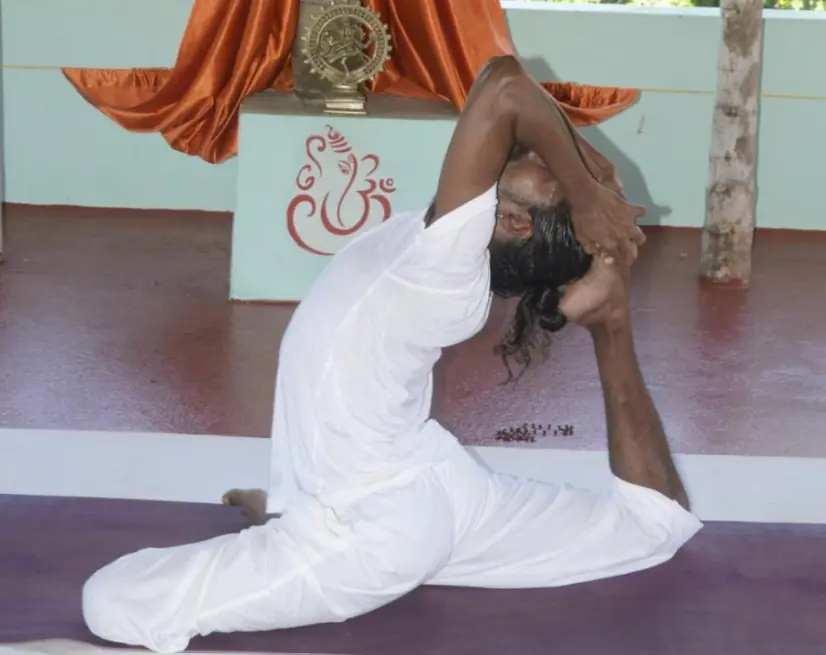
Notice what happens when the feet change position. Observe the movement of the pelvis, the spine and the shoulders. Feel how the breath behaves. Experiment with different ways of entering and leaving the posture.
Then ask yourself:
What is essential here? What can be adapted? What should the student feel? What should they avoid forcing?
This process transforms an asana from something we perform into something we understand.
Understanding the Foundation
Good teaching does not require a student to look exactly like the teacher.
Bodies are different. Proportions are different. Mobility is different. Strength is different. Previous experiences are different.
Therefore, alignment should not become a rigid shape that every body must reproduce.
Instead, we explore the principles behind the posture.
For example, in a standing posture, we may consider:
- grounding through the feet
- relationship between the pelvis and spine
- direction of movement
- stability and mobility
- breath and rhythm
- muscular engagement
- ease within effort
The teacher’s responsibility is to understand these principles well enough to offer meaningful choices to different students.
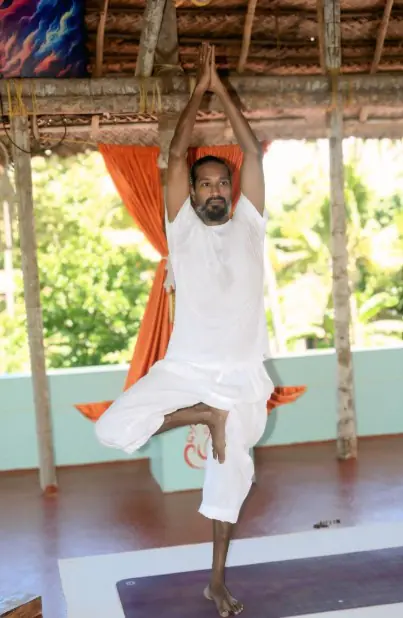
From Instructions to Experience
A powerful yoga class is not simply a collection of verbal instructions.
It is a journey.
The teacher gradually gives the student enough information to discover the posture for themselves.
Instead of giving ten instructions at once, we can build the experience step by step:
Arrive → Ground → Breathe → Organize → Explore → Observe → Release
This creates space for awareness.
The student begins to feel the posture rather than simply trying to copy its external appearance.
The Teacher’s Practice Continues
A yoga teacher never really finishes learning an asana. The same posture can reveal something different after years of practice. This is why teaching should remain connected to personal practice.
A movement that once felt difficult may become familiar. A posture that once seemed simple may reveal a much deeper relationship between breath, stability and attention.
Your mat becomes your laboratory.
You explore. You observe. You make mistakes. You refine. You discover. And eventually, what you have genuinely understood becomes part of your teaching.
Sequencing Is More Than Putting Poses Together
At Shiva Rishi Yoga, we also look at how individual asanas communicate with one another. A sequence should have a reason. A thoughtful sequence creates a relationship between postures.
Why begin with grounding movements?
Why introduce certain hip actions before a deeper posture?
Why prepare the shoulders before a backbend?
Why place a particular counter-pose after an intense movement?
One movement prepares the body for another. One action becomes the foundation for the next.
The class begins to feel less like a list of poses and more like a conversation between movement, breath and awareness.
The Art of Giving the Right Cue
A good cue is not necessarily a long cue. Sometimes one clear sentence can change a student’s entire experience.
Instead of overwhelming students with instructions, the teacher learns to recognize what is most useful at that moment.
A cue might create:
Stability.
“Press through the whole foot.”
Space.
“Create length through the spine before moving deeper.”
Awareness.
“Notice whether you are holding the breath.”
Direction.
“Move from the pelvis rather than collapsing into the lower back.”
The teacher observes first, then speaks.
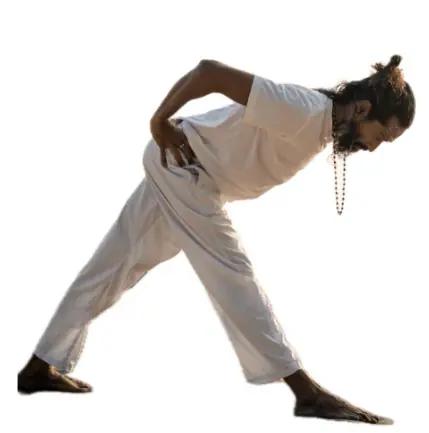
Teaching Different Bodies
There is no single perfect yoga body.
A responsible teacher understands that an asana may need different expressions for different students. Props, variations, reduced ranges of movement and alternative transitions are not signs of weakness. They are tools for intelligent practice and allow you to go deeper and reach further quicker when practiced regularly.
A block can create space.
A strap can provide connection.
A wall can provide stability.
A modified variation can allow a student to experience the principle of an asana without forcing their body into a shape it is not ready for.
Adaptation is part of teaching.
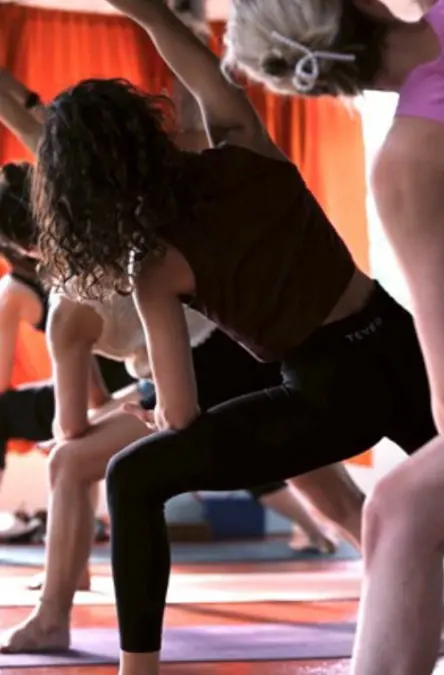
The Teacher as an Observer
One of the most important skills in teaching yoga is learning to observe.
Watch how a student enters a posture. Listen to their breathing. Notice unnecessary tension.
Observe whether they understand the instruction. Sometimes the best teaching response is another verbal cue.
Sometimes it is a demonstration.
Sometimes it is a modification.
Sometimes it is simply giving the student time.
Teaching becomes more intelligent when we stop trying to make every student practice in exactly the same way.
From Knowledge to Wisdom
Information can be memorized. Understanding must be experienced.
A teacher may know the Sanskrit name of an asana, its alignment points and its theoretical benefits. But teaching becomes deeper when that knowledge is combined with practice, observation, experience and compassion.
At Shiva Rishi Yoga, our aim is not to create teachers who simply memorize sequences. We encourage teachers to develop the ability to understand why they are teaching something, how they are teaching it, and when to adapt it.
Because the real art of teaching yoga is not showing people how to make a shape. It is helping them become more aware while they are making it and listening to their bodies.
Om Namah Shivaya