Ganesha: The Wisdom of New Beginnings
Reading time: 5-6 minutes
September arrives as a month of transition. The intensity of summer begins to soften, the seasons slowly change, and nature seems to invite us to pause, reflect, and prepare for what comes next.
In the Hindu tradition, September often coincides with one of the most beloved festivals dedicated to Lord Ganesha — Ganesh Chaturthi. In 2026, Ganesh Chaturthi will be celebrated on Monday, September 14, during the Shukla Paksha of the lunar month of Bhadrapada. The festival traditionally continues for several days, culminating in Ganesh Visarjan on Anant Chaturdashi, which falls on September 25 in 2026.
But why is Ganesha especially meaningful when we think about beginnings, transitions, and the spiritual journey? And what can Ganesha teach us as we enter a new season of life?
Who Is Ganesha?
Ganesha, also known as Ganapati, Vinayaka and Vighneshvara, is one of the most widely loved deities in the Hindu tradition. He is traditionally associated with wisdom, discernment, auspicious beginnings, prosperity and the removal of obstacles. He is often invoked before starting something new — a journey, a ceremony, a business, a spiritual practice or an important undertaking.
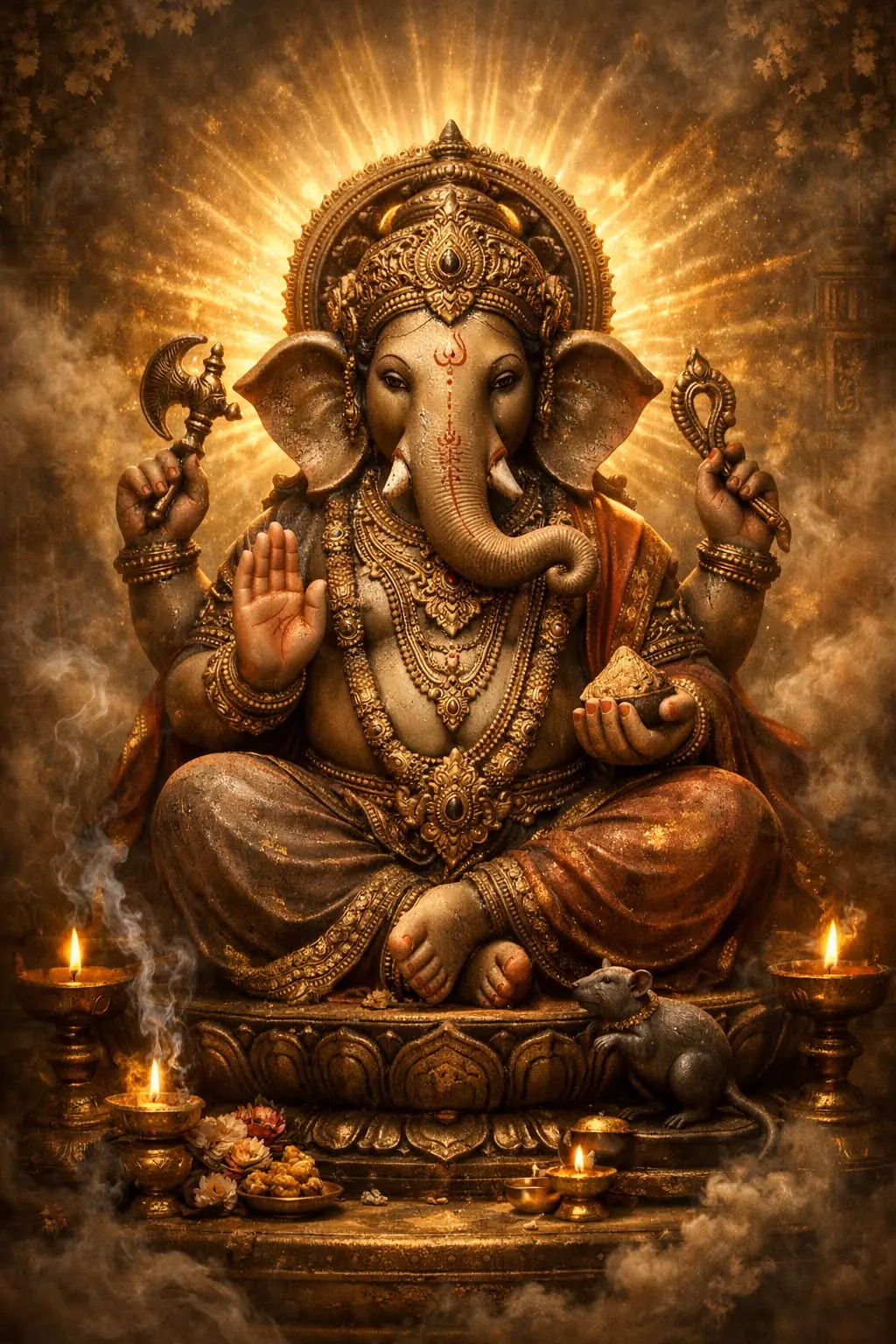
His distinctive form makes him immediately recognizable: the elephant head, large ears, rounded belly and small mouse as his vehicle. Yet behind this beautiful imagery lies a profound spiritual teaching.
The elephant represents strength, intelligence, memory and the ability to move through difficulties with patience. His large ears remind us to listen carefully. His small eyes suggest concentration and the ability to look deeply. His trunk represents adaptability and fine judgement— the ability to be both powerful and delicate according to what the situation requires.
Even Ganesha’s mouse carries meaning. The mouse can represent the restless, constantly moving mind — always searching, wanting and exploring. Ganesha sitting above or riding the mouse symbolically reminds us that wisdom can guide and master the restless mind.
In this way, Ganesha is not simply a deity who magically removes every difficulty. He represents the wisdom that allows us to meet difficulties consciously.
Ganesha as the Remover of Obstacles
One of Ganesha’s most famous names is Vighnaharta, meaning the remover of obstacles. But in yoga and spiritual practice, an obstacle is not always something outside us. Sometimes the greatest obstacles are within: Fear. Doubt. Attachment. Ego. Laziness. Confusion. Old habits. The inability to let go.
We may wish for life to become easier, but yoga teaches something deeper: rather than waiting for every obstacle to disappear, we can develop the awareness, strength and clarity to move through them.
When we sit quietly for meditation, we encounter our own restless mind. When we practice asana, we encounter limitations in the body. When we study yogic philosophy, we encounter beliefs and assumptions that may have shaped our lives for years.
Every one of these can become an obstacle — or an opportunity for growth. Ganesha reminds us to approach them with patience, intelligence and humility.
Why Is Ganesh Chaturthi Celebrated in September?
Ganesh Chaturthi is celebrated according to the Hindu lunar calendar rather than a fixed Gregorian date. It falls on the fourth lunar day, or Chaturthi, of the bright fortnight of Bhadrapada. Because the lunar calendar moves relative to the Western calendar, the festival can occur in August or September.
In 2026, the Chaturthi tithi begins on September 14 and ends on September 15, while the principal celebration is observed on September 14.
The festival is particularly famous in Maharashtra and several other parts of India, where enormous public celebrations, beautifully decorated pandals, music, prayers and processions can fill cities with the presence of Ganesha. Yet Ganesha does not belong only to one region.He is worshipped throughout India and has become a beloved symbol of wisdom and auspicious beginnings across the world.
From Arrival to Visarjan
One of the most beautiful aspects of Ganesh Chaturthi is the journey from arrival to departure. A clay image of Ganesha is ceremonially welcomed into a home, temple or community space. It becomes the focus of prayers, offerings, chanting and devotion.
Then, after several days of celebration, the image is taken in procession and immersed in water during Visarjan. At first this may seem like a contradiction:
Why lovingly create and worship an image, only to eventually immerse it in water?
The answer is deeply connected to yoga. The physical form is temporary. The divine principle is not.The clay image reminds us that everything in the material world has a beginning, a period of existence and eventually an ending. Through Visarjan, devotees symbolically return the form to the elements from which it came. It is a teaching about impermanence, surrender and letting go.
We welcome. We experience. We learn. And eventually, we release.
What Ganesha Teaches Us About Yoga
Yoga is often understood as a physical practice, but its deeper purpose is the transformation of consciousness. Ganesha offers several teachings that can be brought directly into our practice.
Listen deeply.
His large ears remind us to listen — not only to other people, but also to our own body, breath and inner voice.
Stay grounded.
His powerful form represents stability. A yoga practice is not about constantly seeking extraordinary experiences. It is about becoming steady within ourselves.
Be adaptable.
The elephant’s trunk can perform tasks requiring tremendous strength as well as remarkable delicacy. In the same way, yoga asks us to develop both strength and sensitivity.
Develop fine judgement.
Spiritual growth requires viveka — the ability to distinguish what is beneficial from what is harmful, what is temporary from what is lasting, and what is ego from what is deeper awareness.
Let go.
The story of Ganesha Visarjan reminds us that attachment to form is not the same as connection to the divine.
You do not need elaborate rituals to connect with the symbolism of Ganesha. At the beginning of your practice, sit comfortably for a few moments. Close your eyes. Take several slow breaths. Then silently ask yourself:
What is the obstacle I am carrying at this moment?
Perhaps it is physical tension, anxiety about the health of a loved one or money. Perhaps it is a thought that keeps returning. Perhaps it is something you are afraid to begin.
Rather than fighting it, simply observe it. Then softly chant the traditional Ganesha mantra out loud or in your mind:
Om Gam Ganapataye Namaha
The mantra is traditionally offered to Ganesha and is associated with invoking his presence, wisdom and guidance. Allow the sound to become a reminder that obstacles do not always need to be conquered through force. Sometimes they are transformed through awareness.
Ganesha and the Journey at Shiva Rishi Yoga
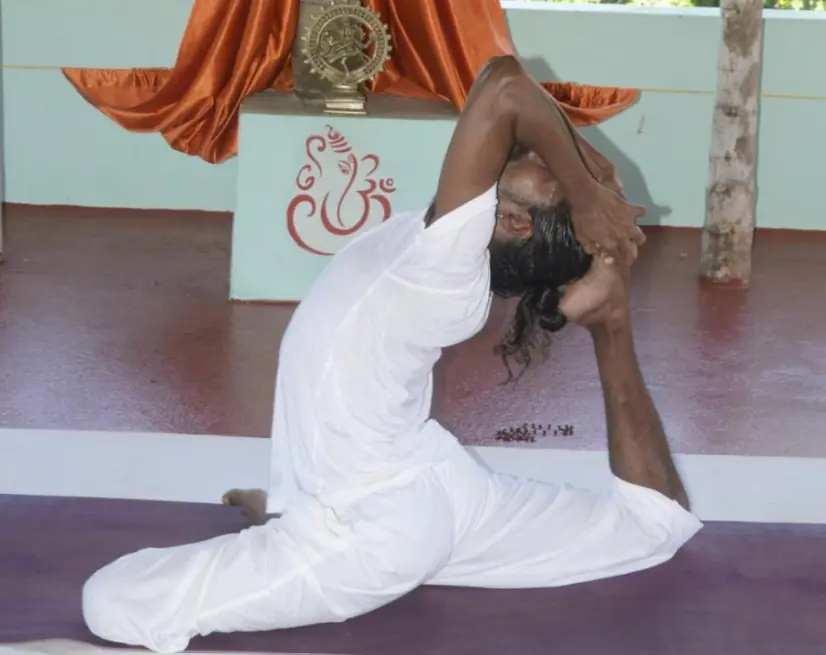
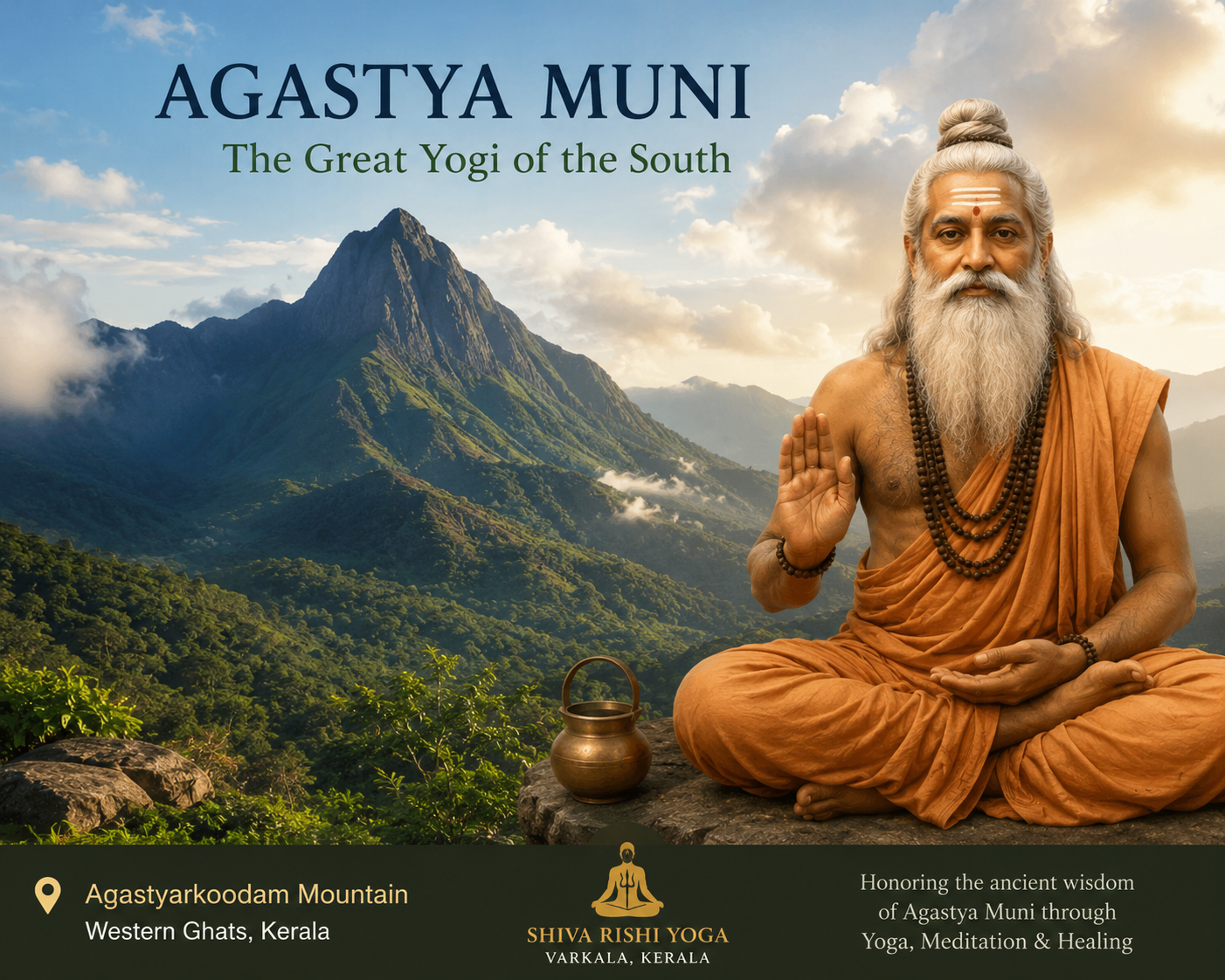
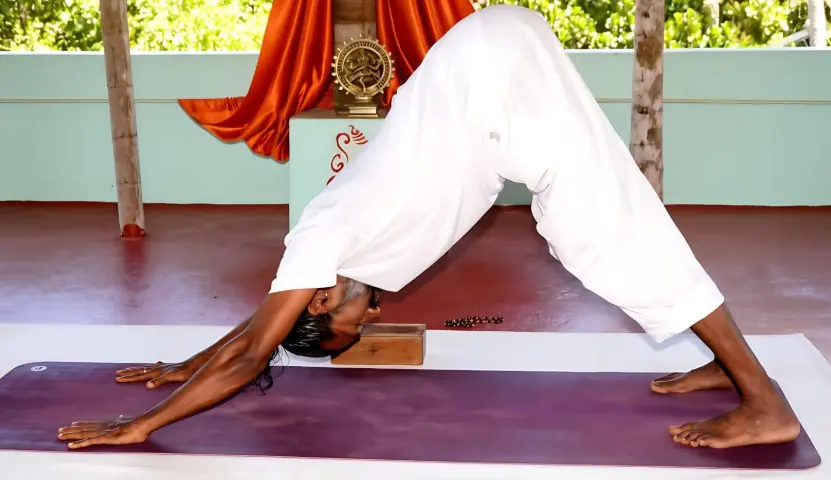
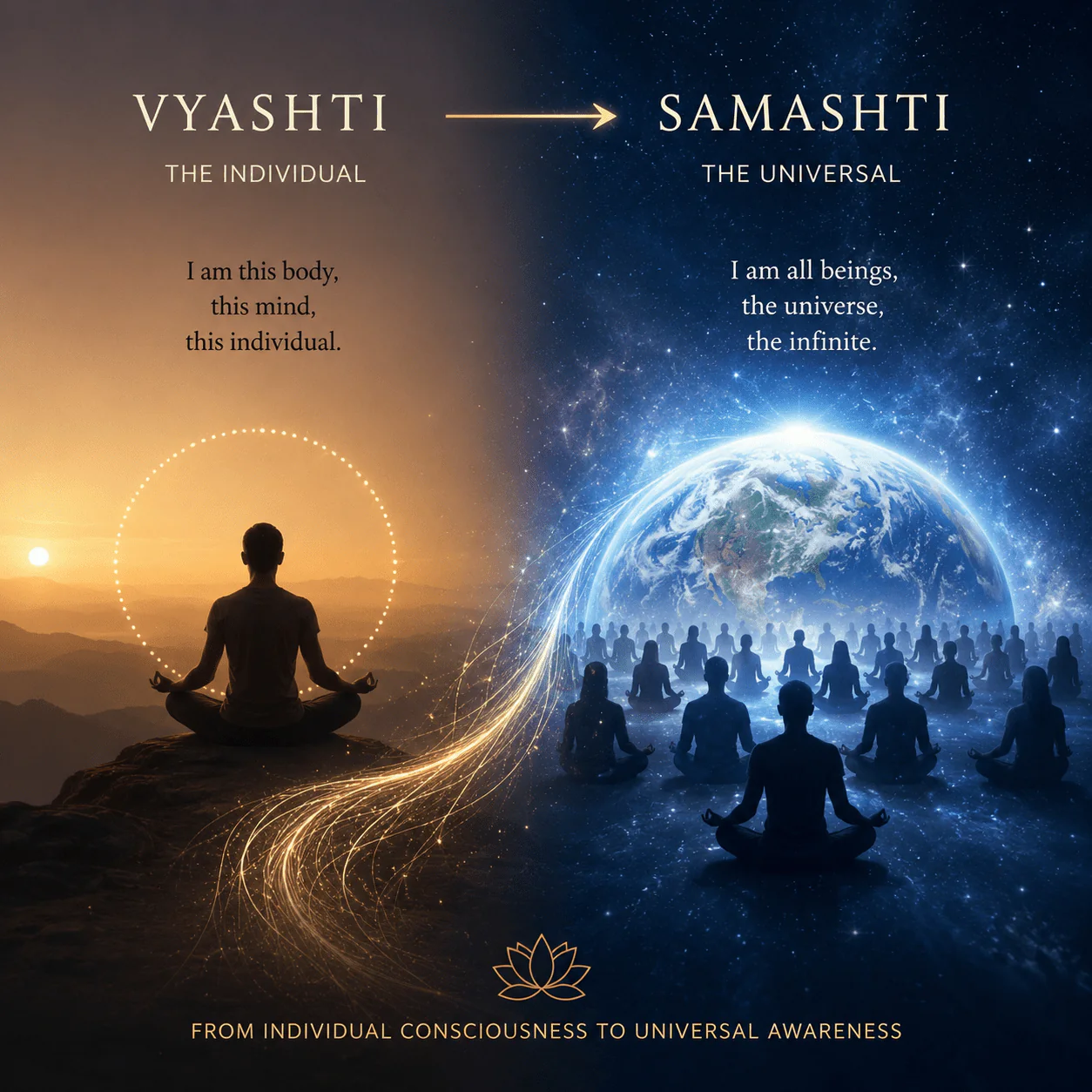
At Shiva Rishi Yoga in Varkala, Kerala, yoga is understood not simply as physical exercise, but as a journey from individual awareness toward a deeper understanding of ourselves and the world around us. Ganesha’s teachings naturally belong to this journey.
Ganesha reminds us that wisdom is not the absence of difficulty. Wisdom is the ability to walk through difficulty without losing our inner balance.
That is why every student will be greeted by Ganesha upon walking into the beautiful Yoga center. The first floor is decorated with imagery and decorative items of Ganesha, as well as the big altar on the ground floor is focused on Ganesha, while a smaller altar on the roof top is dedicated to lord Shiva.
Every student who comes to yoga arrives with a different story. Some are beginning again after years away from practice. Some are searching for direction. Others want to deepen their understanding of yoga, meditation, Ayurveda, pranayama and yogic philosophy.
Whatever brings us to the mat, there will always be obstacles. The question is not whether obstacles will appear. The question is how we meet them.
With fear or with awareness?
With resistance or with acceptance?
With ego or with humility?
Om Gam Ganapataye Namaha.
May Ganesha guide the way.